



Blacktip Reef Shark: A Common and Iconic Sight in Polynesia’s Lagoons
Among the many natural wonders that inhabit the crystal-clear waters of French Polynesia, the blacktip reef shark stands out as one of the most iconic marine species. Frequently spotted in shallow lagoons, this shark is the most commonly encountered during snorkeling and scuba diving adventures.
Typically measuring between 1 and 2 meters in length and weighing around 20 kilograms, the blacktip reef shark is easy to identify. Its sleek, grey body features characteristic black markings on the tips of its fins—especially the dorsal fin, which often breaks the surface as it glides through the water.
Despite its impressive appearance, this shark poses no threat to humans. Active mainly during daylight hours, it is naturally timid and tends to swim away when approached.
Whether you’re snorkeling in the Tuamotu Atolls, diving around the Society Islands, or exploring the wild coastlines of the Marquesas, encountering this graceful predator is a memorable and likely experience. It is present across all five of French Polynesia’s archipelagos and plays a vital role in the region’s marine ecosystem

Whitetip Reef Shark: The Tranquil Watcher of Polynesia’s Coral Reefs
Commonly referred to as the “white fin of the lagoon,” the whitetip reef shark is one of the more discreet yet captivating marine species found in French Polynesia’s reef ecosystems. With its sleek grey body dotted with dark spots and a pale underside, it is easily recognized by the white tips on its dorsal and tail fins—distinctive markings that inspired its name.
Measuring between 1.7 and 2.1 meters in length, this shark has a calm and passive nature, especially when compared to the more energetic blacktip reef shark. During daylight hours, it often rests motionless on sandy bottoms or nestled in reef crevices, particularly near the drop-offs of outer reefs.
Encounters with the whitetip reef shark are most common during deeper scuba dives or along reef passes throughout all five of French Polynesia’s archipelagos. Observing this quiet predator in its natural habitat offers a serene and unforgettable glimpse into the underwater life of the Pacific.

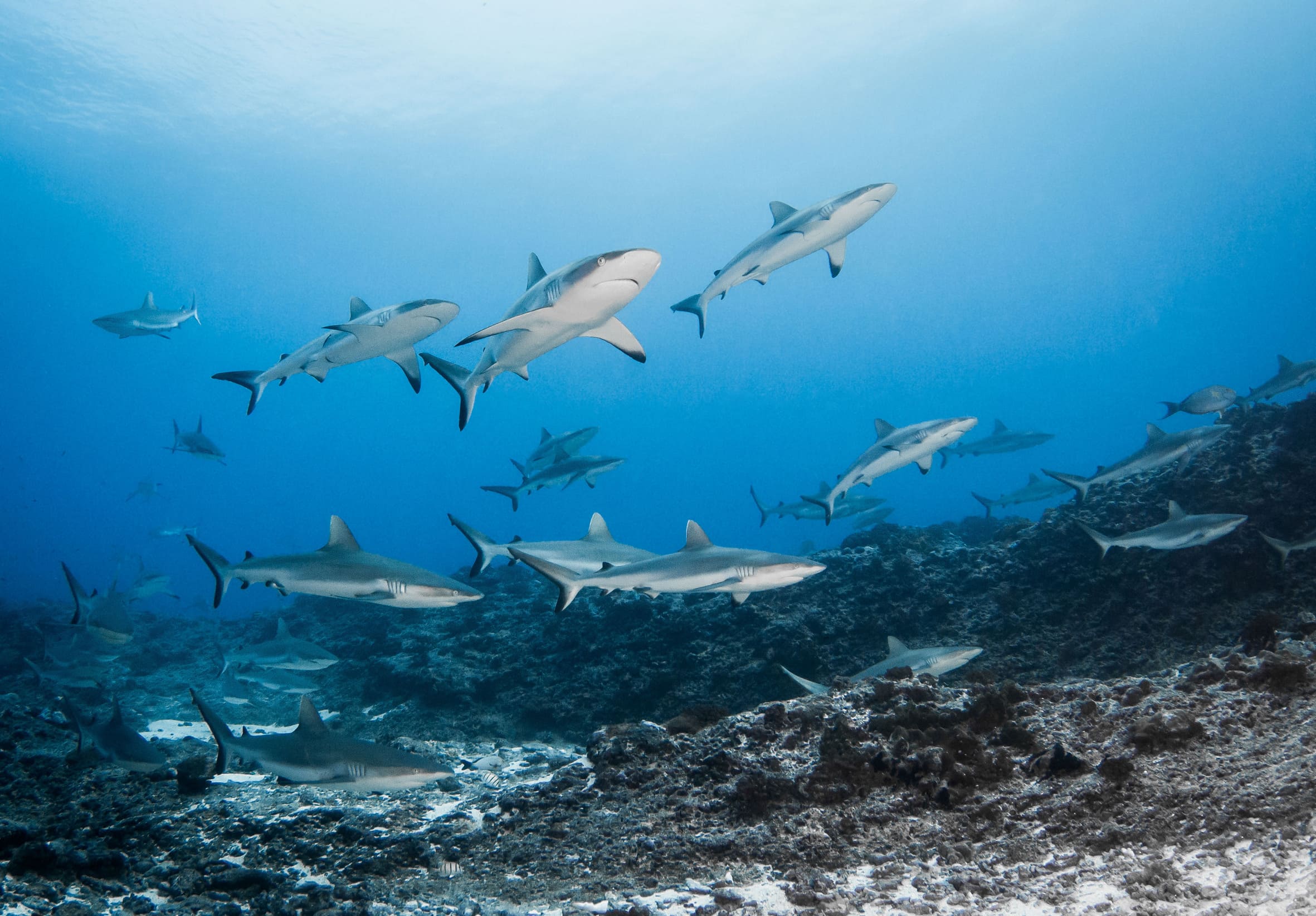
Grey Reef Shark: A Curious and Iconic Predator of Polynesian Waters
Among the many remarkable marine creatures that inhabit the depths of French Polynesia, the grey reef shark stands out as one of the most awe-inspiring. Sleek and streamlined, this species typically reaches lengths just under 2 meters. Its smooth grey upper body contrasts with a bright white underside, and its pointed pectoral fins tipped in dark grey make it easy to identify. Unlike its cousin, the blacktip reef shark, it lacks the dark marking on the dorsal fin.
During daylight hours, grey reef sharks often swim together in groups, creating dramatic underwater scenes. When night falls, however, they shift into solitary mode, becoming agile nocturnal hunters. One of the most extraordinary shark gatherings on Earth happens in Fakarava, in the Tuamotu archipelago—where hundreds of grey reef sharks congregate in a narrow reef pass, forming what divers call the “wall of sharks,” a natural phenomenon that attracts underwater enthusiasts from across the globe.
Despite their powerful appearance, grey reef sharks pose no danger to humans. On the contrary, they are known for their inquisitive nature, frequently approaching divers out of curiosity rather than aggression.
Found throughout the five archipelagos of French Polynesia, the grey reef shark offers an unforgettable encounter for anyone passionate about ocean exploration and marine wildlife.

The Nurse Shark: A Gentle Giant Resting in Polynesia’s Lagoons
Often referred to as the “sleeping shark,” the nurse shark is one of the calmest and most docile species inhabiting the tropical waters of French Polynesia. It’s commonly found lying motionless on the sandy lagoon floors, where it can remain still for hours—earning its peaceful reputation.
Despite its impressive size—reaching up to 3.2 meters in length—the nurse shark is completely harmless to humans. It prefers shallow to moderate depths, typically between 1 and 70 meters, and is known for its calm demeanor. This laid-back nature allows snorkelers and divers to get remarkably close, making for a rare and serene underwater encounter.
Present across all five of French Polynesia’s archipelagos, the nurse shark is a symbol of the stillness and balance found in these vibrant coral ecosystems. Observing this gentle creature in its natural environment offers a moment of tranquility beneath the surface—perfectly reflecting the slow rhythm of Polynesian reef life.

The Lemon Shark: The Golden Giant of Polynesia’s Reefs
Among the largest reef-dwelling sharks in French Polynesia, the lemon shark (Negaprion brevirostris) commands attention with its powerful build and unique coloration. Reaching lengths of up to 3.5 meters and weighing close to 200 kilograms, this solitary predator is easily identified by its broad, blunt snout, pale yellow eyes, and the subtle golden tint along its underside—traits that inspired its name.
Unlike more commonly seen reef sharks, the lemon shark has a stockier appearance and prefers quiet sandy bottoms or coastal reef zones. It is frequently observed at some of Polynesia’s top dive locations, including the dramatic canyons of Opunohu in Moorea, the legendary White Valley off Tahiti, and the rich coral site of Tapu in Bora Bora.
For divers and ocean lovers, encountering this majestic species in its natural habitat is a powerful and unforgettable experience—one that showcases the wild beauty of Polynesian marine life.

The Tiger Shark: A Powerful Predator of Polynesia’s Deep Waters
Among the most formidable predators in the marine world, the tiger shark (Galeocerdo cuvier) stands out for both its size and striking appearance. This impressive species can grow between 3 and 4 meters in length and weigh up to 500 kilograms, making it one of the ocean’s true giants.
Mostly solitary and nocturnal, the tiger shark prefers to hunt under the cover of darkness, using its keen senses to track down a wide variety of prey. Its name comes from the dark, vertical stripes running along its brownish-grey body—markings that fade with age but remain one of its most distinctive features.
Encounters with this majestic predator are rare and thrilling. Divers exploring renowned sites like White Valley in Tahiti or the passes of the Tuamotu Archipelago may be fortunate enough to come across one of these elusive creatures. It’s an unforgettable experience—both humbling and exhilarating—for any passionate diver or ocean enthusiast.

Great Hammerhead Shark: A Majestic Icon of the Tuamotu Depths
The great hammerhead shark (Sphyrna mokarran) is one of the most striking and powerful predators of the ocean. Easily identified by its wide, hammer-shaped head—known as a “cephalofoil”—this charismatic species captivates divers at first sight.
Reaching lengths of up to 6 meters and weighing as much as 500 kilograms, the great hammerhead stands out not only for its size but also for its tall, sickle-shaped dorsal fin and muscular build, distinguishing it from other hammerhead species.
Highly sought after by experienced divers, an encounter with this elusive giant is often considered the ultimate underwater thrill. It’s a breathtaking moment filled with adrenaline and awe—etched forever in the memory of those lucky enough to witness it.
In French Polynesia, the best chance to see great hammerheads is in the Tuamotu Archipelago, particularly around Rangiroa, during the months of December to March, when sightings are more frequent in deeper reef passes.
