


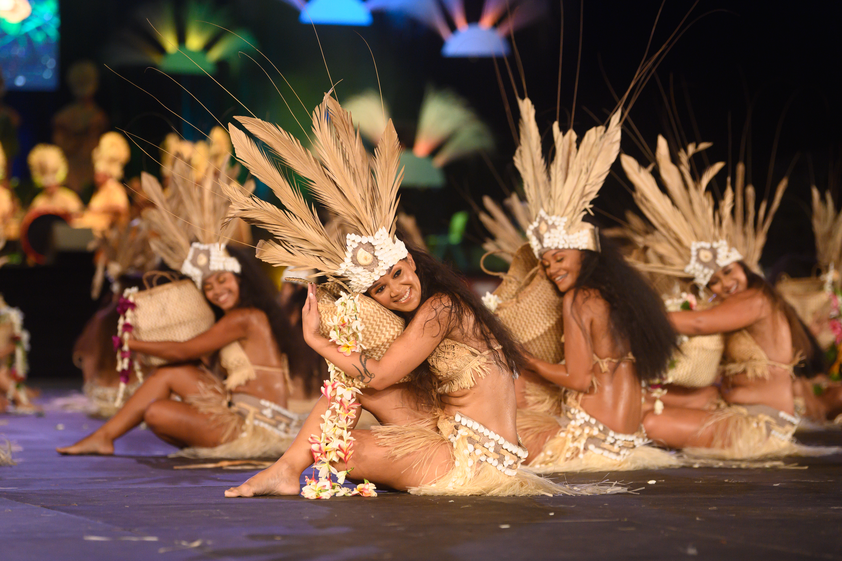

Held every July on the iconic To’atā stage in downtown Papeete, the Heiva i Tahiti is one of the oldest cultural festivals in the world. First organized in 1881 under the name Tiurai, it’s now a key event celebrating the heritage of the Mā’ohi people. For nearly three weeks (next edition: July 3–19, 2025), the festival brings together artists, athletes, artisans, and thousands of spectators in a vibrant cultural immersion.
Dance, Song, and Artistic Excellence
The Heiva features traditional Polynesian dance competitions—from amateur (hura ava tau) to professional troupes (hura tau)—as well as vocal performances in styles like tārava, hīmene, ‘ute, and rū’au. Each group includes 80 to 200 performers, showcasing elaborate costumes, live percussion, and storytelling through movement. A jury of cultural experts evaluates the performances based on technical mastery, choreography, language use, and symbolic depth.


Traditional Sports & the Cultural Village
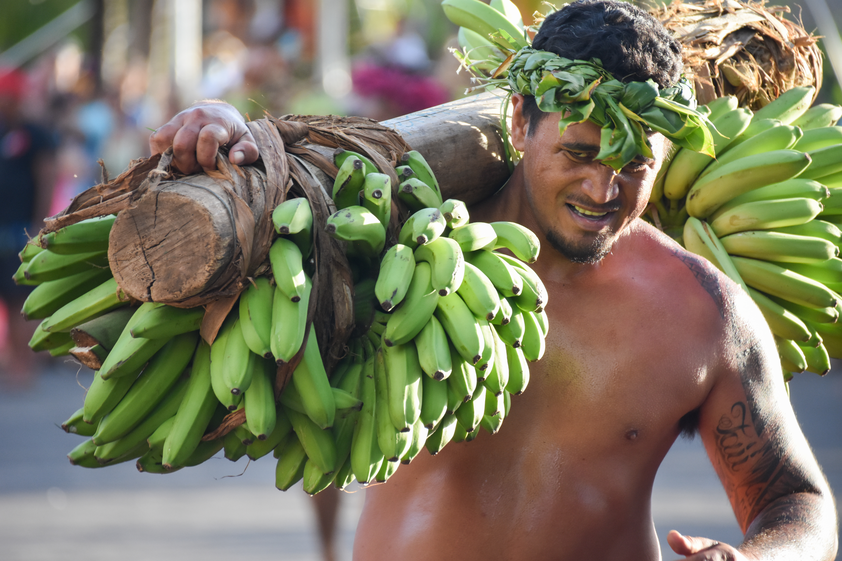
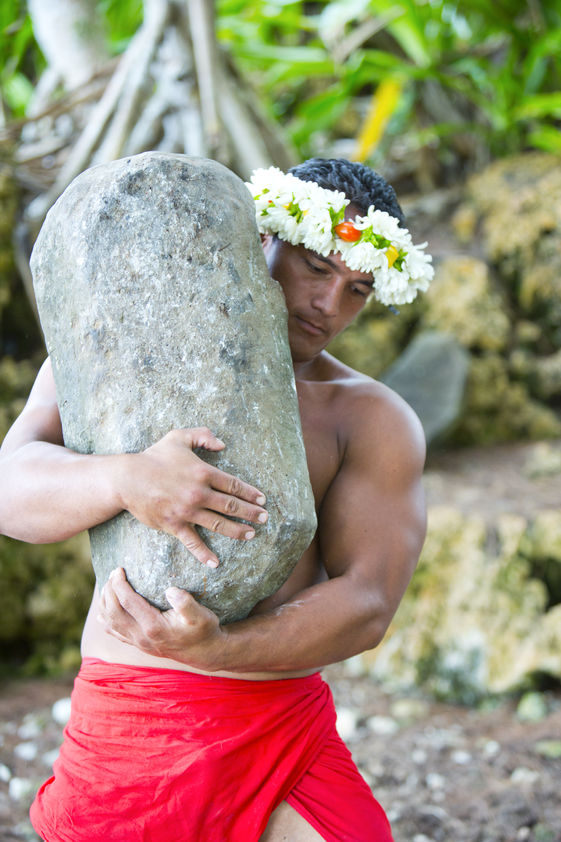
The Heiva also honors Tu’aro Mā’ohi, Polynesian traditional sports: outrigger canoe races (va’a), stone lifting, fruit-carrying, javelin throwing, and coconut tree climbing. Meanwhile, the Heiva Village hosts local artisans—sculptors, weavers, tapa makers, and jewelers—in an open market filled with free performances and workshops, showcasing living ancestral skills.

A Human and Emotional Journey
For organizers and participants, the Heiva is more than a competition—it’s a “reunion with ourselves,” a collective deep dive into an ancient cultural memory filled with grace, celebration, and unity. Every year, over 1,000 artists perform in front of 30,000 spectators, with full coverage by local channel TNTV, including daily highlights, artist interviews, and the prestigious Madeleine Moua Award, named after the matriarch of Tahitian dance.
A Festival as Cultural Ambassador
Beyond the show, the Heiva is a showcase of Mā’ohi identity. It supports and promotes the work of master choreographers, chanters, musicians, and costume makers—true guardians of cultural heritage. With the backing of Tahiti Tourisme, it also plays a major role in international cultural outreach and unity across Polynesian islands.
The Art of Costumes: Where Tradition, Innovation & Nature Meet
Polynesian Botanical Haute Couture
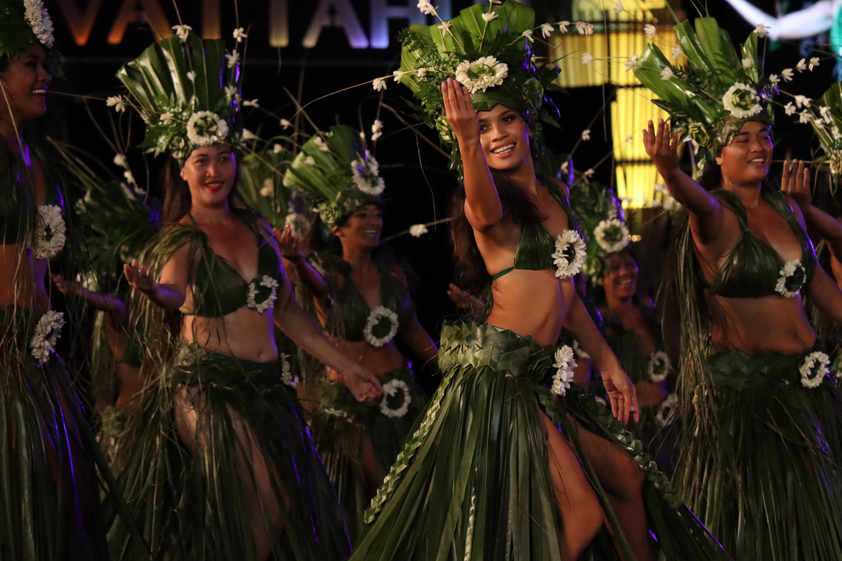
Costumes at the Heiva are ephemeral works of art made from natural materials: auti leaves, more (hibiscus fibers), coconut palm fronds (niau), seeds, shells, and tapa cloth. Every element is braided, dyed, or knotted using ancient techniques. Their design reflects a sacred bond between the performer, the land, and the story portrayed on stage.

Master Designers Honoring Heritage
Among the standout artists: Nelson Labbey (aka Nel’s), designer for Hitireva under Kehaulani Chanquy, known for his tapa-and-rope creations. Freddy “Rounui” Fagu, costumer for Hei Tahiti (led by Tiare Trompette), has won multiple awards for his meticulous craftsmanship. Agathe Legayic, costumer for Toakura, created a moon-cycle-inspired costume made entirely of fresh, aromatic materials.
A Collective and Precise Effort
Creating a Heiva costume is a massive team effort. At Tamarii Mataiea, over 50 volunteers—sewers, harvesters, braiders—work for months under Isabelle Drollet to craft each unique outfit. In troupes like Manahau, dancers even help make their own costumes, ensuring intergenerational skill-sharing and cultural transmission.
Creativity Within Strict Cultural Guidelines
Heiva costumes are subject to strict regulations: only natural materials are allowed, and plastic is forbidden. Designs must match the choreography’s theme and narrative. Judging criteria include visual harmony, fabrication complexity, and cultural symbolism—making each creation an intricate storytelling device in itself.
Art Meant to Disappear
After months of creation, these botanical masterpieces are worn for only a few minutes. Their fleeting nature adds emotional and symbolic weight. They aren’t made to last, but to make an impact—leaving a mark on the collective memory as a tribute to the land, history, and spirit of the Polynesian people.
Heiva Anecdotes: Behind the Scenes of a Cultural Icon
Beyond the dazzling shows and intense competitions, the Heiva is full of real-life stories—moving, inspiring, and deeply human. Here are five remarkable behind-the-scenes moments that show the heart of the festival.
Learning Reo Tahiti… on Stage
During the 2024 edition, young dancers in ‘O Tahiti E were required to rehearse entirely in Reo Tahiti (Tahitian language)—with no translations. For many, this immersive experience was their first contact with the ancestral tongue. Within weeks, they began to understand and speak the language of their roots. As reported in Le Monde, the Heiva became a powerful linguistic revival tool.
A Last-Minute Tribute in 2018
The troupe Fare Ihi no Huahine faced a tragic loss when their choreographer, Wilson Mahuta, passed away just months before the festival. Rather than give up, his students rewrote their entire performance, crafting a heartfelt tribute through the legend of Hotu Hiva. The audience and jury were visibly moved by their resilience and devotion.
Artistic and Political Rivalries
In the 2000s, a fierce rivalry played out between two dance legends: Coco Hotahota and Manouche Lehartel. Their differing artistic visions also reflected opposing political alliances—with one supporting Oscar Temaru, the other Gaston Flosse. The Heiva became a symbolic battlefield for cultural and ideological expression.
The “Mana” Transfer from Vai’ete
When the Heiva moved from Vai’ete Square to To’atā in 1998, a traditional practitioner performed a ceremony to “transfer” the mana (spiritual power) of the site. Months later, two jury members passed away unexpectedly. Rumors of a curse began circulating backstage, illustrating the depth of spiritual belief intertwined with the festival.
Sem Manutahi’s Farewell
In 2017, legendary orator Sem Manutahi gave his final performance with Nuna’a e Hau, dramatizing the wrath of gods and the uprising of a people. His powerful delivery—part chant, part theater, part prayer—was recorded by TNTV and is remembered as a masterful farewell, passing on the torch to a new generation of storytellers.
Final Thoughts
The Heiva i Tahiti is much more than a festival. It’s a living mosaic of dance, language, craftsmanship, spirituality, and identity. Whether on stage or behind the scenes, it reveals the soul of a people fiercely connected to their land, their ancestors, and each other.